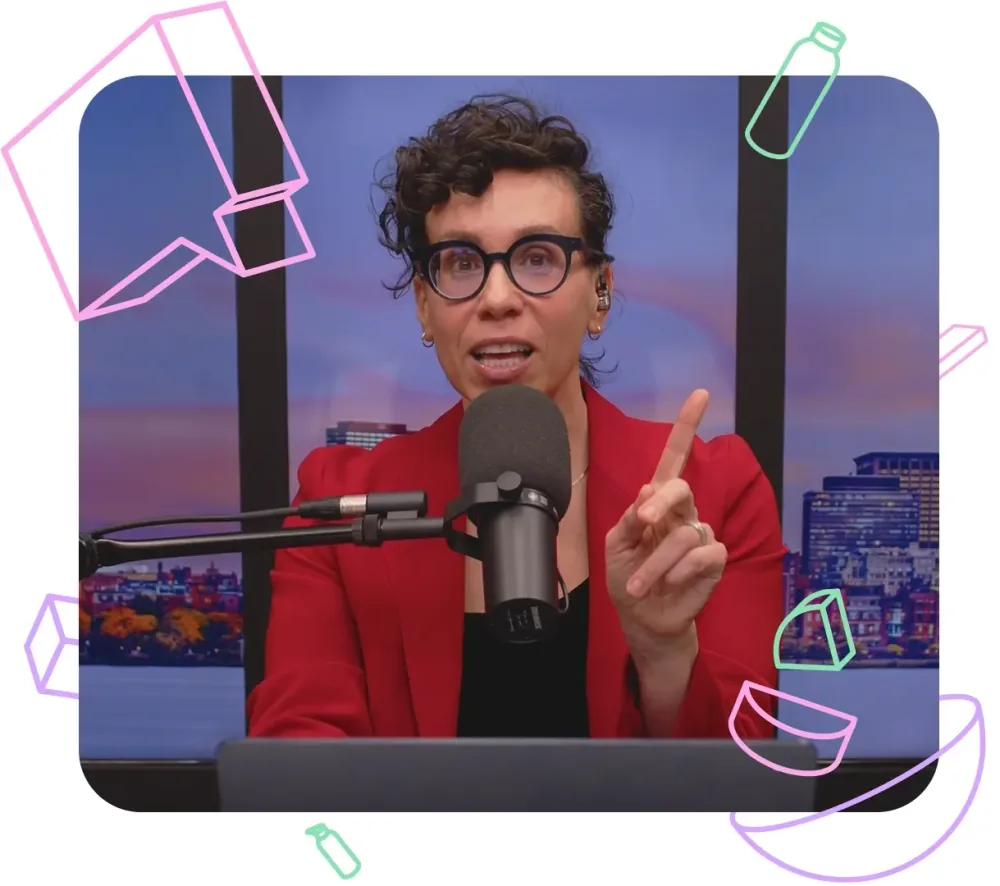
Every brand eventually changes something big — price, packaging, format, the category it sits in — and that puts existing distribution on the line. After raising its prices to match true production costs, Vermont Creamery walked away from an unprofitable Walmart relationship, then earned its way back into 400 stores. Tuyyo Foods fell off roughly 1,100 doors of shelf space after a merger brought a full rebrand and repackaging. Harrison Kahn, President and GM of Vermont Creamery, and Stephanie Garcia Turner, co-founder and CCO of Tuyyo Foods, break down how to make a major change and still get your retail partners to come along for the ride.You will learn:How to notify and prep retail buyers before a repackaging or UPC change, so your product doesn't quietly fall off shelfWhat to do when a retailer's promotional demands push your pricing below what your product actually costs to makeHow to build a compelling case for re-entry after leaving a retailer, including what data and proof points actually move a buyerHow to prioritize which retail partners and categories to carry forward after a merger or repositioning, instead of trying to keep everyoneWhat to do the moment a retailer signals your velocity is too low and discontinuation is on the table
September 22, 2026
Kendall Kransdorf, founder of Cotto, a whipped cottage cheese dip, on a hero ingredient with a short shelf life and high demand - a combination that forces hard operational decisions. Mary Kate Kloeblen, a supply chain consultant and co-fouder of Golden Thread Operations, walks through where Cotto is actually losing shelf life (it's not always the formula) and what to fix instead.You will learn:How LTL refrigerated shipping can quietly eat days of usable shelf life before a product even reaches a warehouseHow to build formulation flexibility so a supply shortage on your hero ingredient doesn't stall productionWhen to move production closer to your distribution centers, and how colocation reduces both transit risk and quality issuesWhy GS1 rules mean even a small product change can force a new UPC, and how to avoid retail errors because of itHow to structure IP and manufacturing agreements during a tech transfer so you don't lose ownership of your own process
September 15, 2026
Building products with better ingredients is easy to talk about. Building a successful business around them is much harder. Join Tom First, Founder of Culture Pop, and Heather Wood, SVP of Marketing at Goodles, as they discuss the realities of formulation, sourcing, branding, retail growth, and operations, and how they’ve turned clean label products into brands that drive trial, repeat purchase, and sustainable growth.You will learn:How to decide whether an innovation solves a real consumer need or is simply chasing a trendHow to make ingredient decisions that balance taste, consumer value, manufacturing feasibility, and brand positioningHow to simplify an unconventional production process so it can scale without compromising the productHow to choose the right pace and path for growth based on your capital, team, and ability to support new distributionHow to make sure your product and packaging can drive trial and repeat before spending heavily on marketing
September 1, 20261 min
Most founders think getting a distributor is the hard part. Scott Rosenbaum, co-host of the Business of Drinks podcast, has spent 20 years in beverage alcohol distribution and knows landing one is just the beginning. In this episode, he mentors Daeyna Grant, a first-time founder building Gold Crush, an RTD rum-based cocktail, one bar and liquor store at a time. Together, they break down what it actually takes to land the right distributor — and how to make the relationship work once you do.You will learn:What a distributor actually owes you — and what you still have to earn on your ownHow to get a distributor’s attention before you have much leverageThe trade-off between a bigger distributor and one that can give your brand more attentionWhat data and reporting you should expect — and how to fill the gaps when you don’t get itHow to build enough demand that distributors start coming to you instead of the other way around
August 25, 202635 mins
New York's density makes it one of the best cities to build retail distribution — and one of the hardest to crack. Namik Soltan, founder and CEO of GNGR Labs, spent six years self-distributing into hundreds of NYC bodegas, independents, and chains before handing accounts to a distributor. Sean Rosenberg, founder of Goldie, is about to do the same. In this episode, Namik shares tips with Sean through the exact playbook, store by store.You will learn:How to build a retail footprint in NYC without a distributor, starting from zeroWhat it actually takes to get into bodegas, independents, and regional chainsWhen to bring on a distributor, and how to prep your territory before they arriveHow to use free product, sales sheets, and intro deals to drive trialWhat separates brands that scale past their first 50 stores from those that stallHow self-distribution today sets you up for regional and national growth later
August 18, 202637 mins
Building a differentiated brand is only half the battle. The other half is making sure consumers actually understand why it matters.Join Sahra Nguyen, founder & CEO of Nguyen Coffee Supply, and Kyle Nguyen, co-founder of Lucky Ox, to discuss one of the biggest challenges growing brands face: how to stay true to what makes your product unique while communicating it in a way that resonates with mainstream consumers. You will learn:How to figure out what consumers actually care about—and build your messaging around it instead of your assumptionsHow to use Meta ads, Google Search Console, and customer reviews to test positioning before investing in itWhy "meeting consumers where they are" isn't always the right strategy—and when to lean harder into what makes your brand differentHow to decide where limited retail marketing dollars will have the biggest impact on trial and velocityHow to simplify product names, packaging, and messaging without losing what makes your brand uniqueHow to identify merchandising problems that quietly hurt sales—and what brands can do to fix themWhy PR should support your business strategy, not become your business strategy
July 28, 202651 mins
Today's grocery aisle is splitting between shoppers looking for the best deal and those who are happy to pay more for brands they believe are worth it.In this episode, Scott Sanders, Business Intelligence Lead at Carbone, and Jeff Lovering, Chief Data Scientist at Customer Marketing Group, talk through what that shift means for CPG brands. They share practical ways to think about pricing, promotions, and growth—and how to figure out whether your biggest opportunity is pricing, awareness, positioning, distribution, or something else entirely.You'll learn:How to determine whether your brand has earned a premium priceThe difference between a pricing problem, an awareness problem, and a positioning problemWhy premium brands can thrive—even in a value-driven economyHow consumers decide whether your product is "worth it"When promotions drive growth—and when they simply mask bigger issuesHow to use data to diagnose what's really limiting your growthWhat today's split economy means for your long-term brand strategy
July 14, 202644 mins
Getting onto retail shelves can feel like a big accomplishment—but what happens when strong velocity, national distribution, and real sales still don't add up to a profitable business?Lauren Chew of Love + Chew Superfood Cookies shares the story behind her decision to exit 2,500 retail doors through UNFI and KeHE—even with velocities buyers were happy with. Abby June Richards of The CPG CFO breaks down where the P&L falls apart for emerging brands and what founders need to understand about cash conversion cycles, trade spend, and channel-level profitability before signing a retailer contract. And Liana Krasnow of Noodo, a premium bone broth pasta sauce just 21 doors in, asks the questions every early-stage brand should be asking right now. You Will Learn:Why a brand can have great velocity and still be losing money on every caseThe hidden cash conversion cycle that can turn a modest monthly loss into a $3M cash problemHow to evaluate whether a specific retailer is actually a fit—before you sign anythingWhat trade spend really is, why it's not an operating expense, and how misreporting it can hurt you in due diligenceThe factors Lauren would weigh differently with her next brand, including shelf facings, direct shipping, and which retailers to avoid entirelyWhy regional, direct, and foodservice channels may deliver more profit than national distribution—and how to know when you're ready to scale
June 22, 202646 mins