

The Science Behind Better-Tasting Beverages: New Study Validates Steric Technology


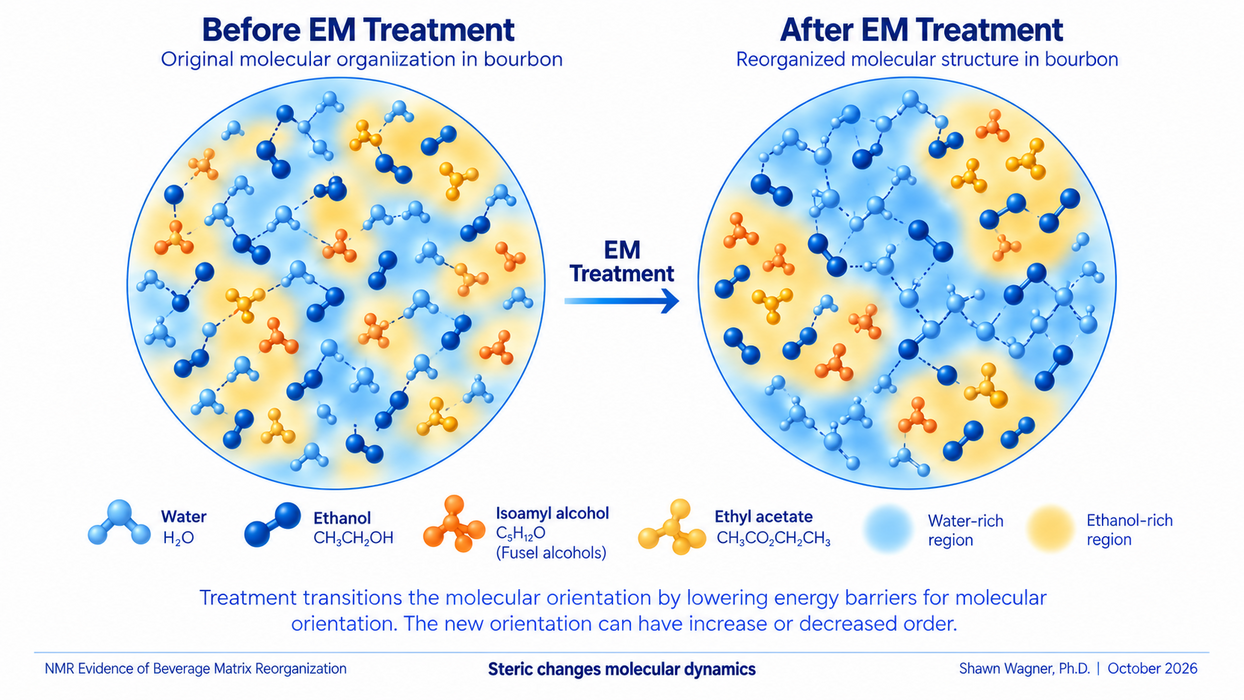
NMR research provides scientific evidence of how Steric Systems influences flavor without changing beverage composition.
Steric Systems, Inc. announced results from a new study conducted by Shawn Wagner, Ph.D., Director of Chemistry Instrumentation Resources at the University of Southern California (USC), providing scientific evidence of how Steric's electromagnetic technology changes molecular interactions in alcoholic beverages without materially altering their chemical composition.
Using nuclear magnetic resonance (NMR) spectroscopy, the research identified reproducible changes in how water, ethanol and flavor compounds interact following Steric treatment. The findings help explain how Steric can improve flavor, aroma and mouthfeel without adding or removing ingredients.
What This Means for Beverage Producers
The findings provide a scientific basis for practical production applications that can directly affect product quality, costs and margins of alcoholic beverages:
Wine: Reduce unwanted bitterness and astringency, improve structure and balance, helping recover at-risk inventory and reduce reliance on expensive corrective treatments.
Spirits: Improve flavor balance and mouthfeel, reduce the sensory impact of undesirable notes such as geosmin, and make previously difficult-to-use barrels or batches commercially viable.
Ready-to-drink beverages: Improve spirits flavor integration, reduce bitterness and alcohol bite, and potentially replace costly ingredients with lower-cost alternatives while maintaining the intended taste profile.
Across spirits categories: Improve batch-to-batch consistency, reduce blending and reformulation requirements, and increase the value of existing inventory without adding chemicals or removing flavor compounds.
Key Scientific Findings
The study examined treated and untreated bourbon samples across multiple processing settings and identified four significant results:
Molecular reorganization: Changes in ethanol's molecular environment reached 99% statistical confidence at four treatment settings.
Water-alcohol interactions: Measurable changes occurred in the hydrogen-bond network connecting water and ethanol.
Flavor compound behavior: Key flavor-related alcohols responded alongside changes in the ethanol network.
Aroma release: Preliminary measurements showed differences in how treated beverages released volatile compounds over time.
Importantly, treatment settings previously preferred in sensory evaluations corresponded to distinct measurable molecular states, establishing a connection between the physical organization of the liquid and perceived taste.
Steric's non-additive, non-thermal technology is already being applied commercially across wine, whiskey, bourbon, rum, tequila, vodka and ready-to-drink beverages.
The study, NMR Evidence of Beverage Matrix Reorganization Following Steric Processing (TR-2026-001), is available through Steric Systems upon request.
About Steric Systems
Steric Systems Inc. develops clean, non-additive technology that helps beverage producers improve flavor, consistency and production economics. Its award-winning process has been successfully applied across wine and spirits to enhance product quality, recover off-spec inventory and reduce production costs. Developed through more than eight years of R&D, Steric technology has been used with some of the world’s largest beverage alcohol brands.
For more information: Learn more
Tagged companies
The news on this page was provided by a third party. BevNET.com, Inc. does not verify, endorse, or vouch for any information or content submitted by third parties, or verify the identity, credentials, or expertise of third parties. Please consider carefully the source of all information and content provided by third parties on this website.